Learning about verbs is a crucial part of any child’s educational journey, especially when they reach grade 6. At this stage, they are introduced to more complex concepts such as linking verbs and action verbs. Understanding the difference and usage of these verbs can significantly improve their grammar skills and overall communication. Linking verbs, for instance, connect the subject of a sentence to additional information, while action verbs express physical or mental actions. Mastering these concepts can be challenging, but with the right resources, such as free printable worksheets, the learning process can be engaging and effective.
For grade 6 students, it’s essential to have a solid grasp of both linking and action verbs to construct coherent and meaningful sentences. This knowledge not only aids in writing but also in speaking, as it helps in conveying thoughts and ideas more clearly. Parents and educators often look for innovative ways to teach these concepts, and one of the most popular methods is through the use of printable worksheets. These worksheets can be tailored to focus on specific areas of verb usage, making them an invaluable tool for targeted learning.
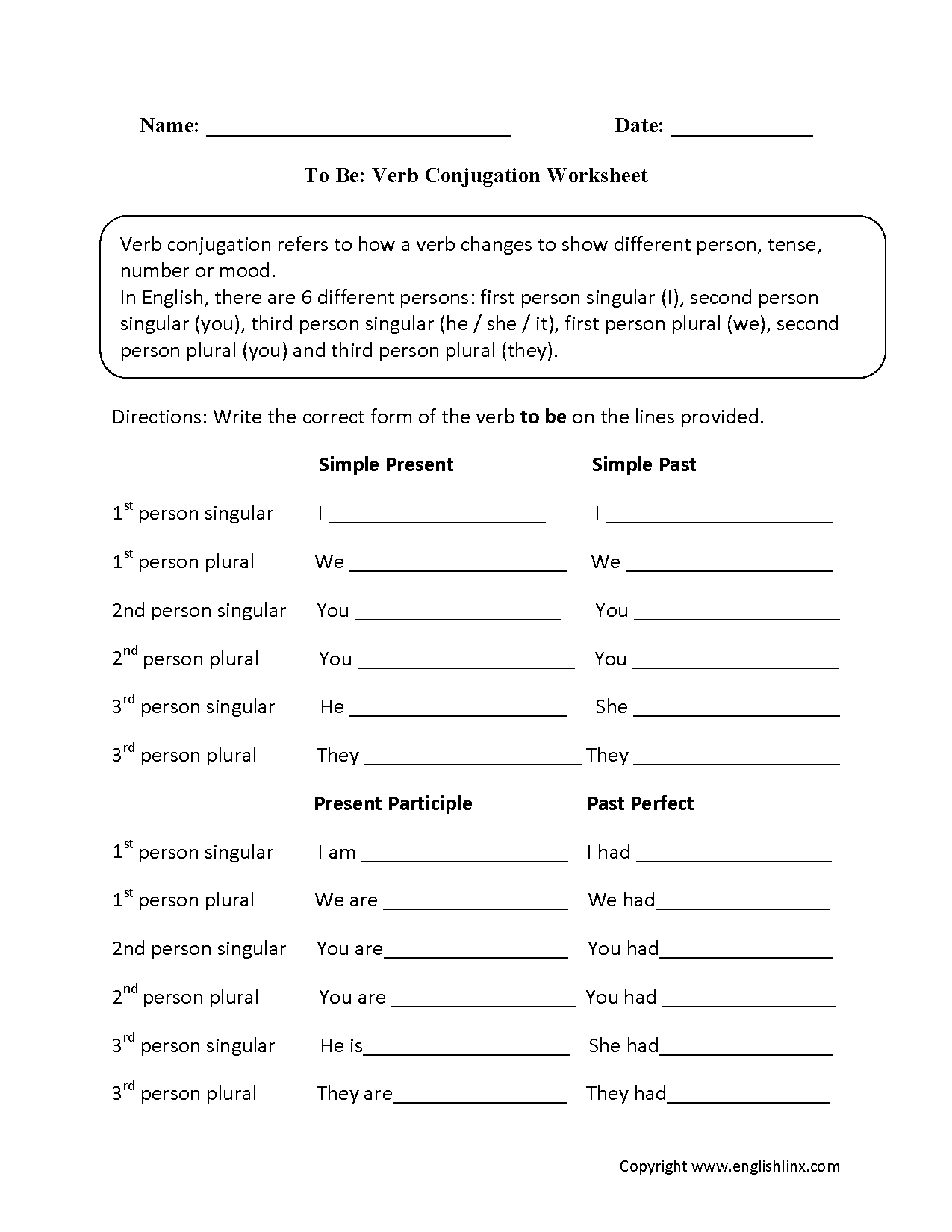
Free Verbs Worksheets Printable Action Linking Irregular Verb Practice
Understanding Linking Verbs
Linking verbs are sometimes referred to as copular verbs. They ‘link’ the subject of a sentence to a predicate – a subject complement. The most common linking verbs are forms of ‘to be,’ such as ‘am,’ ‘is,’ ‘are,’ ‘was,’ ‘were,’ ‘be,’ ‘being,’ and ‘been.’ Other verbs like ‘appear,’ ‘become,’ ‘feel,’ ‘grow,’ ‘look,’ ‘remain,’ ‘seem,’ ‘smell,’ ‘sound,’ and ‘taste’ can also function as linking verbs. Understanding the role of linking verbs is fundamental because they provide more information about the subject without altering its essence.
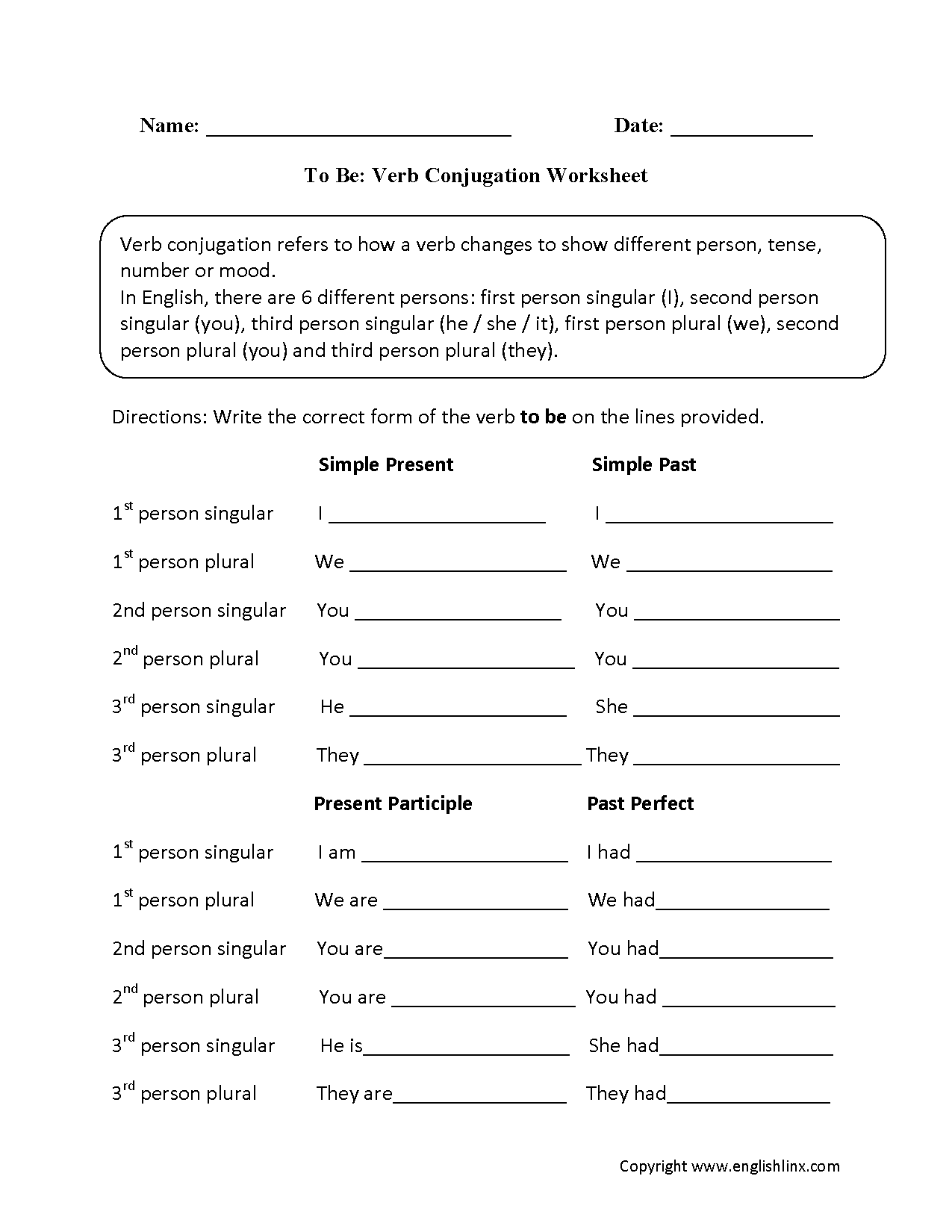
Free Verbs Worksheets Printable Action Linking Irregular Verb Practice
Action Verbs: The Powerhouse of Sentences
Action verbs, on the other hand, are verbs that express physical or mental action. They tell us what the subject of the sentence is doing. Examples include ‘run,’ ‘jump,’ ‘think,’ ‘read,’ and ‘write.’ Action verbs can be transitive (taking an object) or intransitive (not taking an object). For instance, in the sentence ‘She writes a letter,’ ‘writes’ is a transitive action verb because it takes the object ‘letter.’ In contrast, ‘She smiles’ contains an intransitive action verb because ‘smiles’ does not take an object. Teaching action verbs can be made fun with activities that involve acting out the verbs or creating short stories that incorporate a variety of action verbs.
Practicing with Free Printable Worksheets
Utilizing free printable worksheets on linking and action verbs can be a game-changer for grade 6 students. These worksheets can include a range of activities such as identifying verbs in sentences, completing sentences with the correct form of the verb, and creating short paragraphs using a mix of linking and action verbs. The interactive nature of worksheets makes learning engaging, and since they are printable, they can be easily distributed in a classroom setting or used at home for additional practice. Moreover, the immediate feedback provided by worksheets, where students can check their answers, helps reinforce their understanding and builds confidence in their grammar skills.
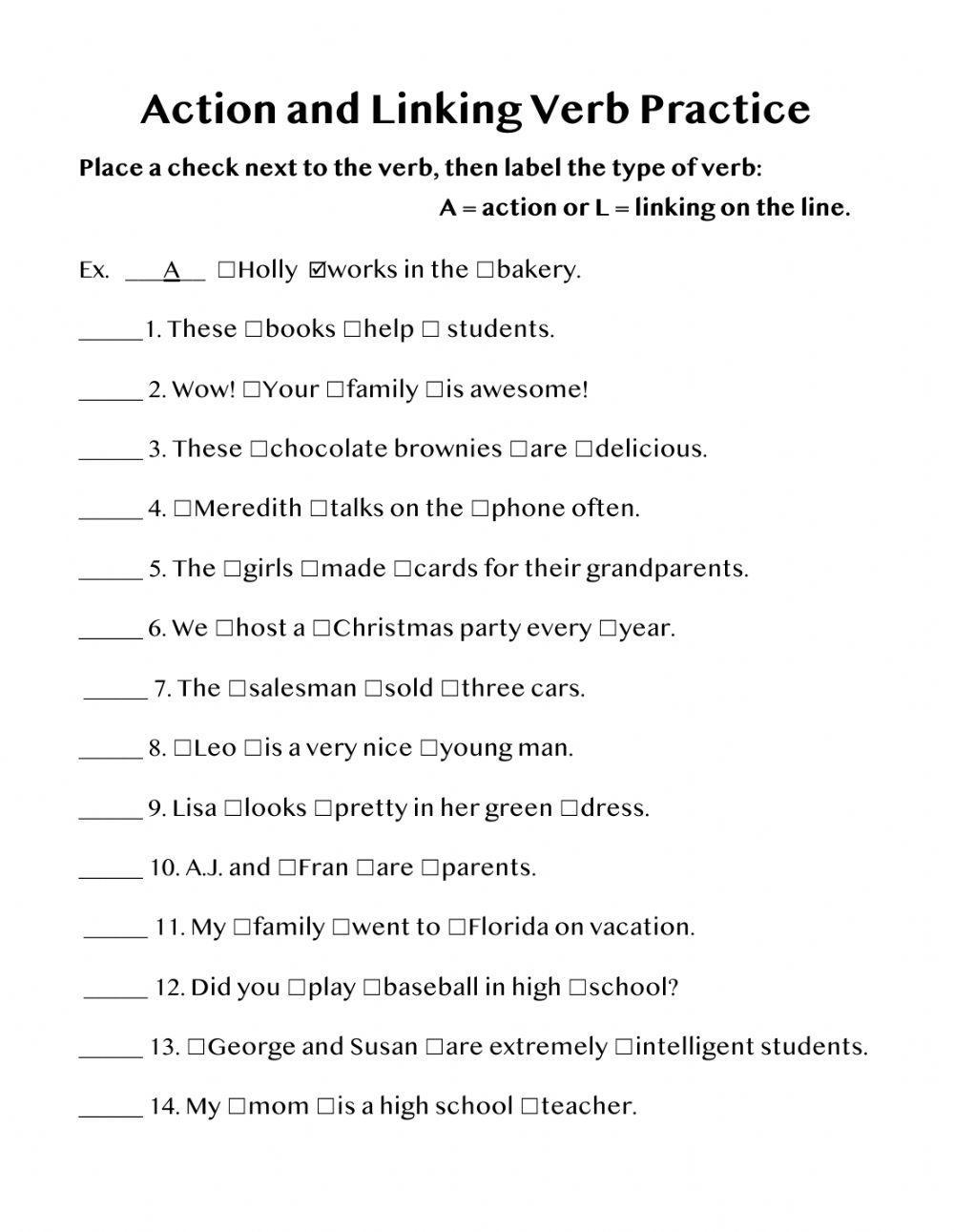
Action Or Linking Verb Worksheet Worksheets Library
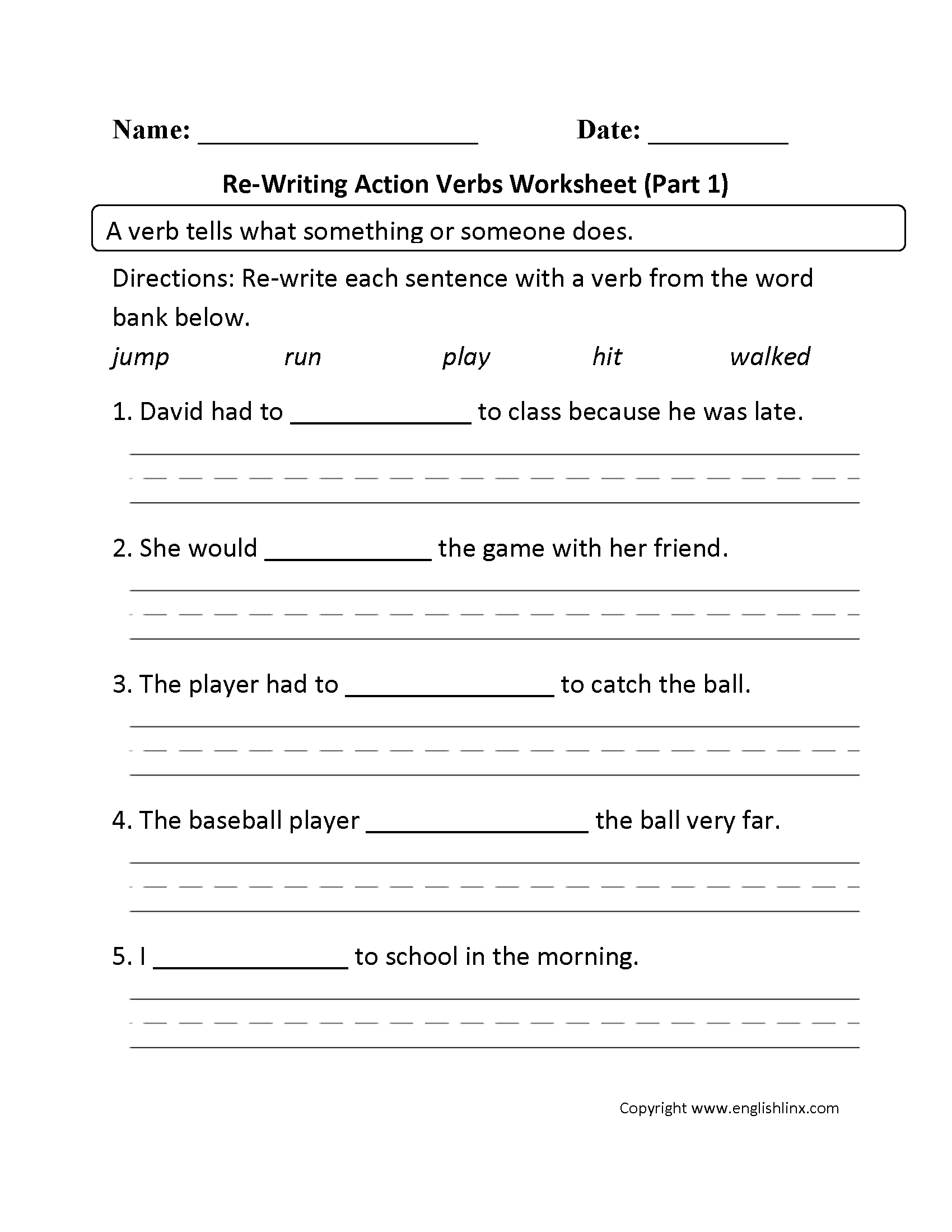
Verbs Worksheets Action Verbs Worksheets
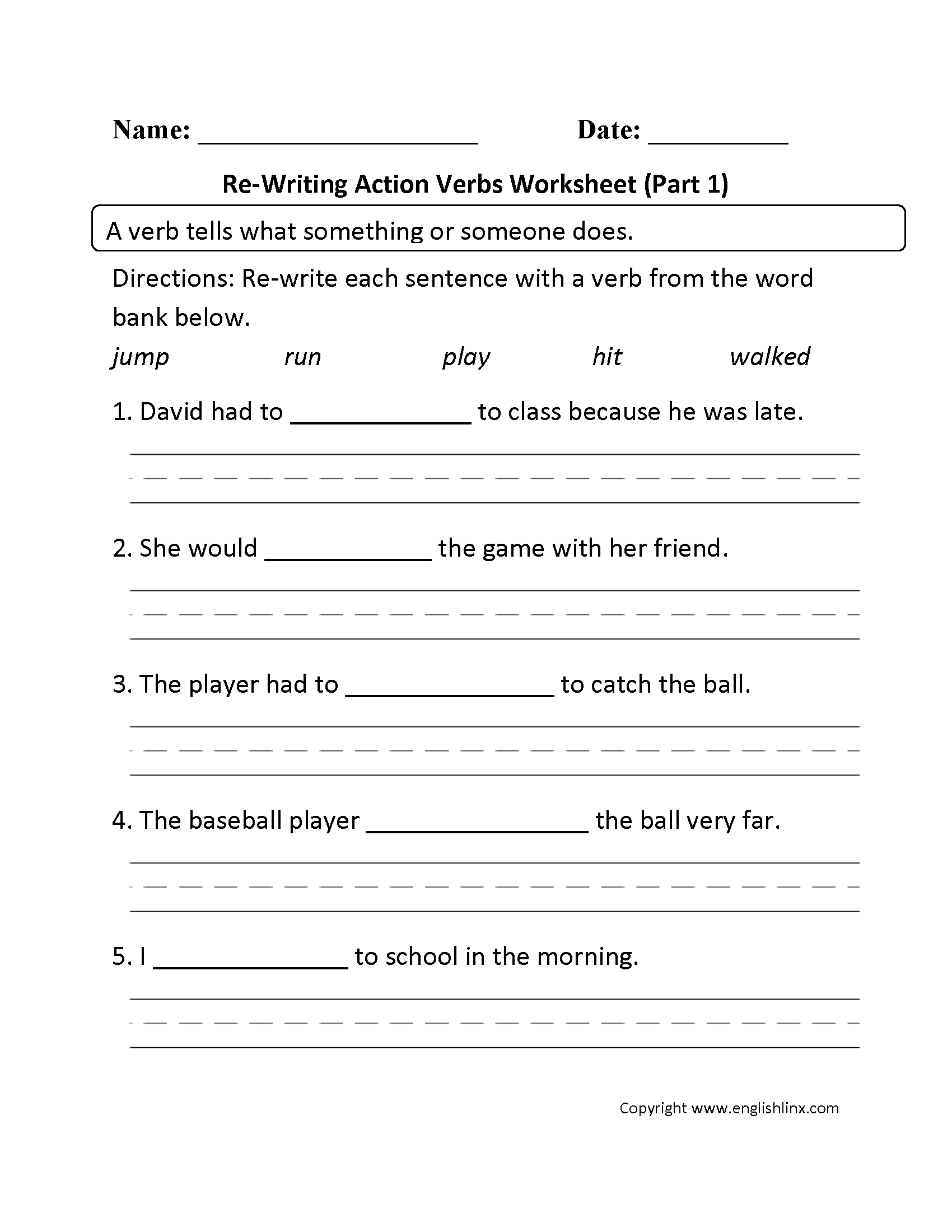
Verbs Worksheets Action Verbs Worksheets