Learning a new language can be a daunting task, but with the right tools and resources, it can become a fun and rewarding experience. For those interested in learning French, understanding the basics of affirmative and negative words is crucial. French affirmative words are used to express agreement or confirmation, while negative words are used to express disagreement or negation. Having a solid grasp of these concepts can help learners to communicate more effectively in French.
One of the most effective ways to learn and practice French is through the use of printable worksheets. These worksheets can be downloaded and printed, allowing learners to practice their language skills at their own pace. A French printable worksheet that focuses on affirmative and negative words can be particularly helpful, as it provides learners with a comprehensive overview of these important concepts. By practicing with these worksheets, learners can improve their understanding of French grammar and vocabulary, and become more confident in their ability to communicate in French.
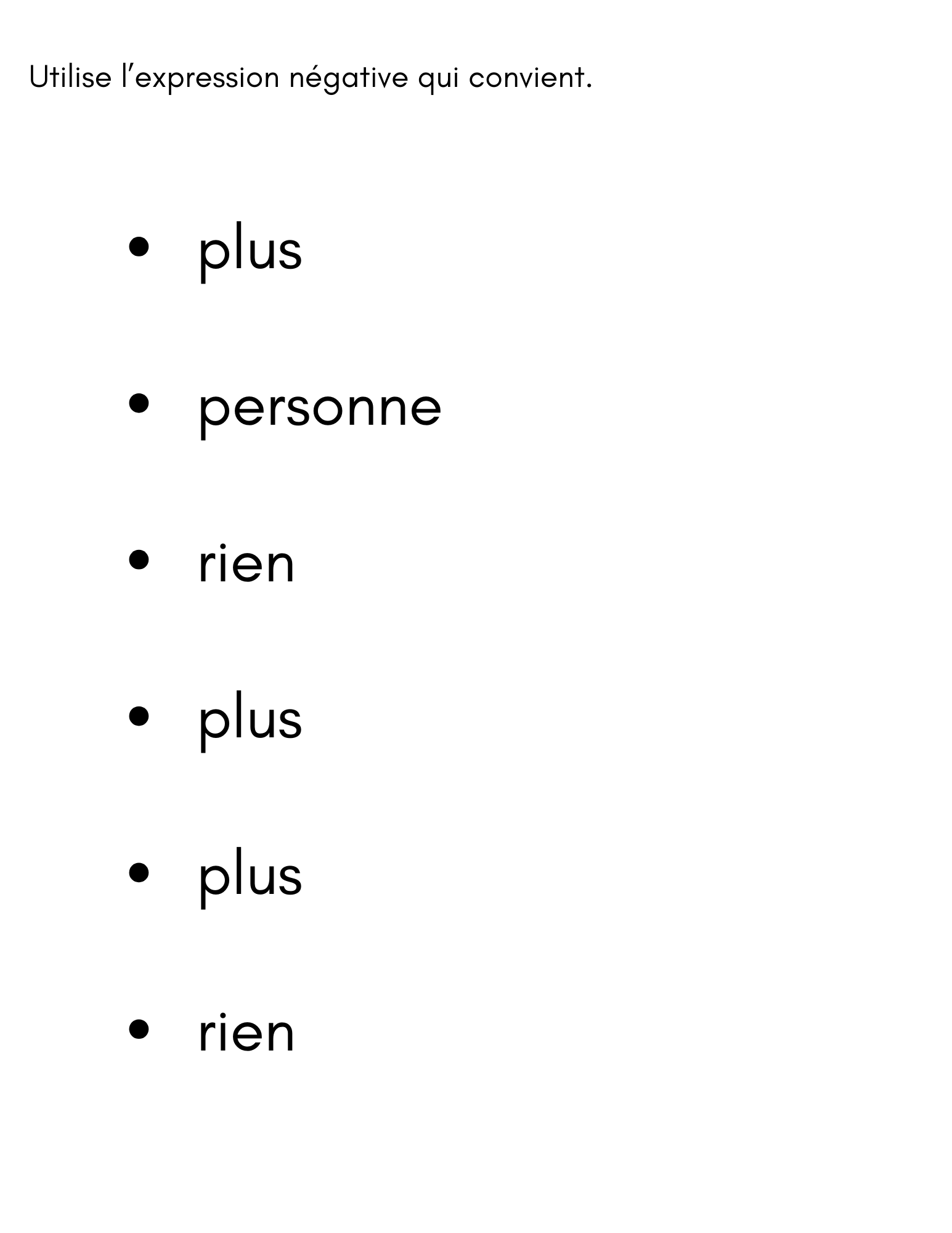
Negative Expressions In French Exercises Les Expressions N Gatives Made By Teachers
Understanding French Affirmative Words
French affirmative words, such as ‘oui’ (yes) and ‘si’ (yes), are used to express agreement or confirmation. These words are essential in everyday conversations, and are used to respond to questions or statements. For example, if someone asks ‘Do you like coffee?’, a learner could respond with ‘Oui, j’aime le café’ (Yes, I like coffee). Understanding how to use affirmative words correctly can help learners to communicate more effectively and confidently in French.
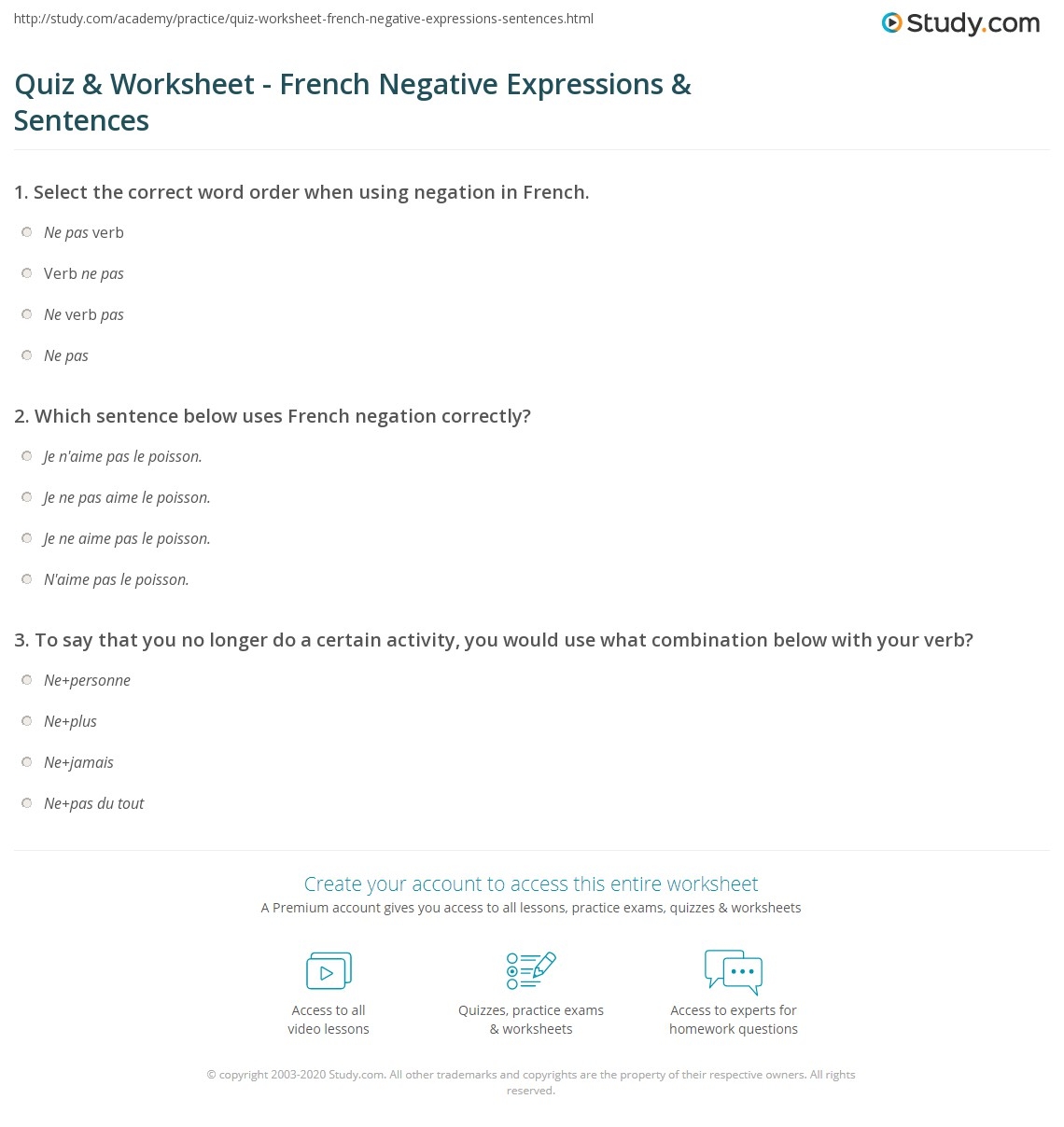
Quiz Worksheet French Negative Expressions Sentences Study
Exploring French Negative Words
French negative words, such as ‘non’ (no) and ‘ne’ (not), are used to express disagreement or negation. These words are also essential in everyday conversations, and are used to respond to questions or statements. For example, if someone asks ‘Do you like tea?’, a learner could respond with ‘Non, je n’aime pas le thé’ (No, I don’t like tea). Understanding how to use negative words correctly can help learners to communicate more effectively and confidently in French.
Creating Your Own French Worksheets
In addition to using pre-made worksheets, learners can also create their own French worksheets to practice specific language skills. This can be a fun and creative way to learn, and can help learners to focus on areas where they need improvement. By creating their own worksheets, learners can tailor their practice to their individual needs and goals, and can become more engaged and motivated in their language learning journey.
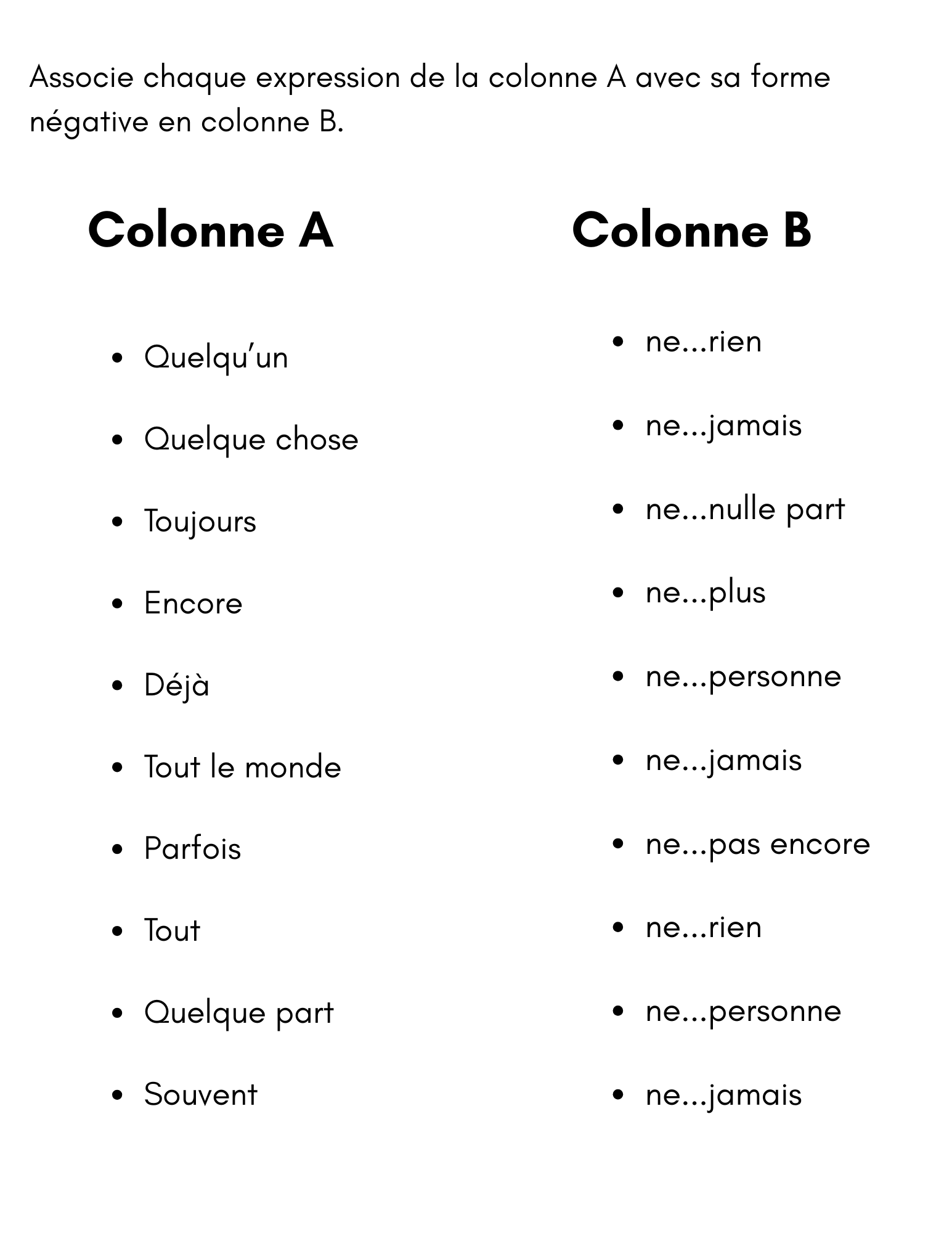
Negative Expressions In French Exercises Les Expressions N Gatives Made By Teachers
By using a French printable worksheet that focuses on affirmative and negative words, learners can improve their understanding of French grammar and vocabulary, and become more confident in their ability to communicate in French. Whether you’re a beginner or an advanced learner, practicing with worksheets can help you to achieve your language learning goals and become a more proficient French speaker.
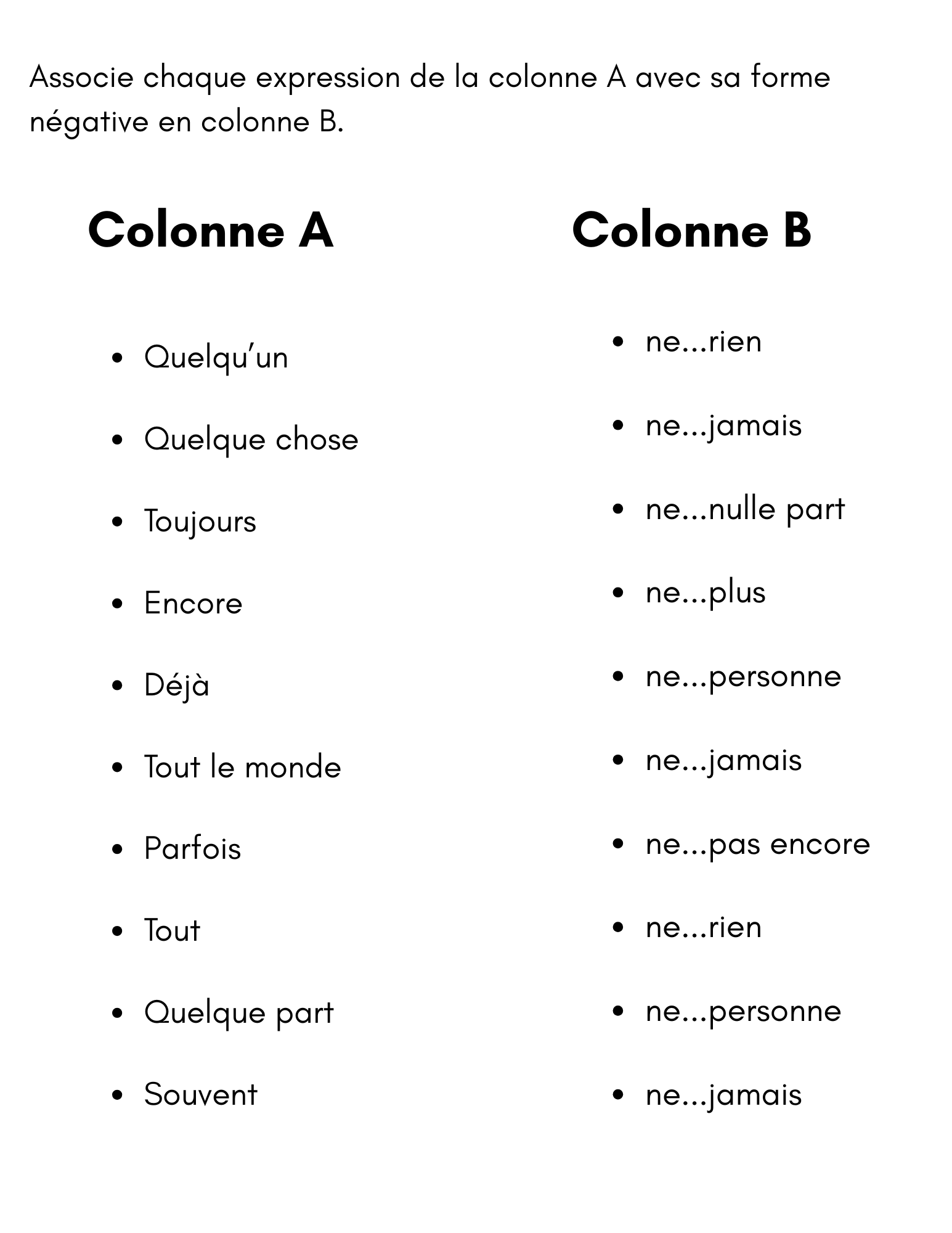
Negative Expressions In French Exercises Les Expressions N Gatives Made By Teachers
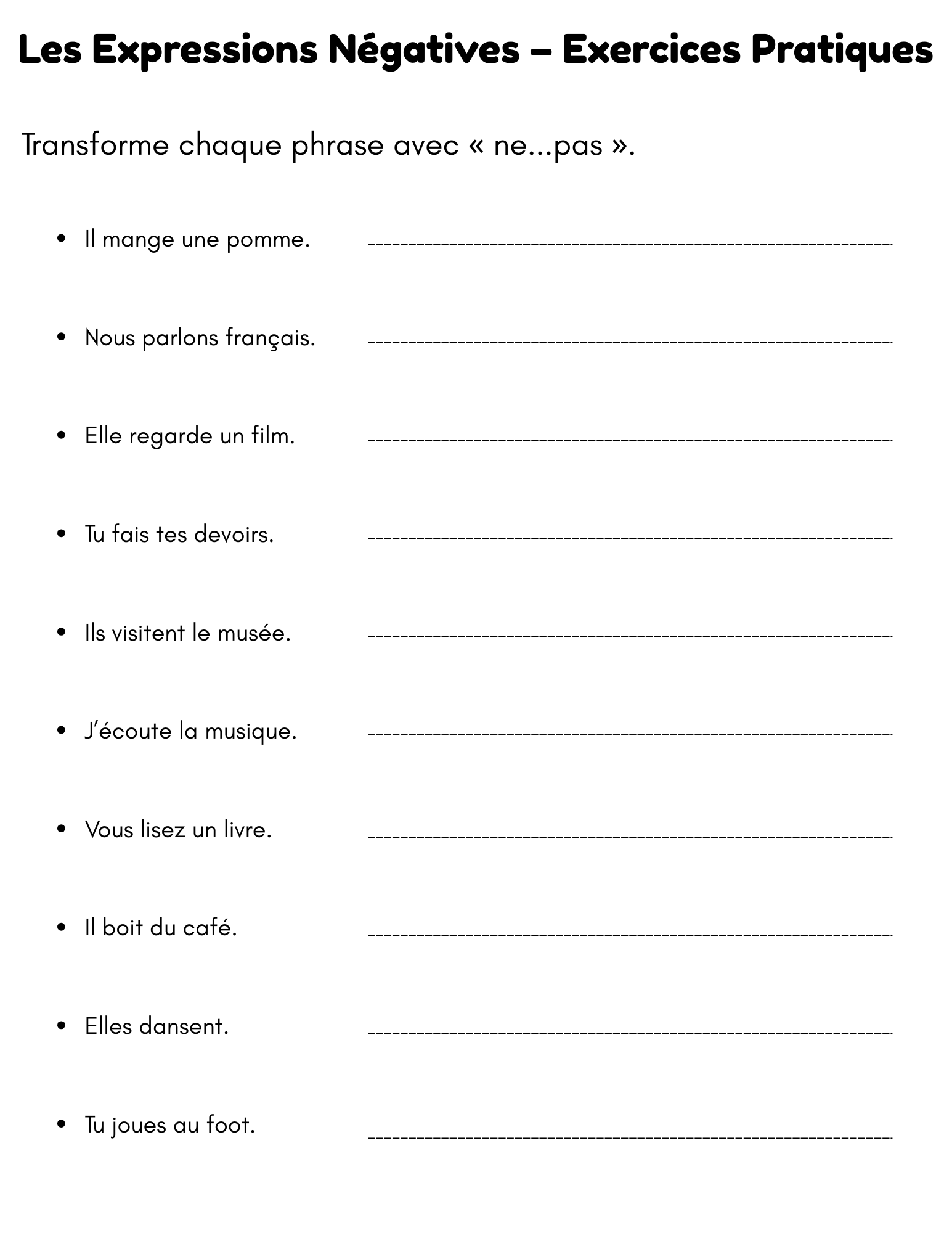
Negative Expressions In French Exercises Les Expressions N Gatives Made By Teachers